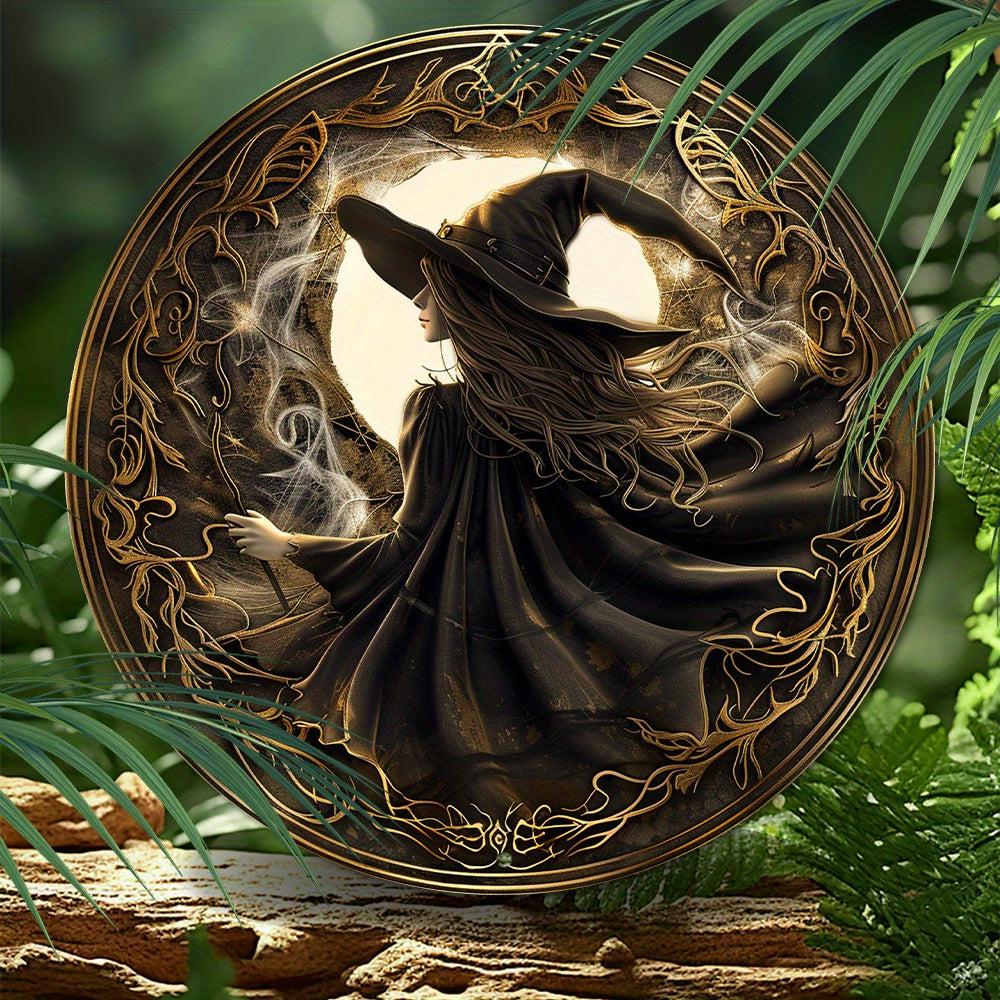
Today, July 21, is apparently Witch’s Day. I say apparently because nobody agrees on where this came from, when it started, or why it landed on this date instead of Halloween, the summer solstice, or National Cauldron Appreciation Week. But the internet has declared it, and I am nothing if not a man who enjoys a good excuse to write about the overlap between mythology, faith, and the strange things human beings decide to celebrate.
The Cartoon Version
Close your eyes and picture a witch. Go ahead. I’ll wait.
You probably saw green skin, a wart on the nose, a pointy hat, a broomstick parked by the door, and a black cat giving you a judgmental look. Maybe a cauldron bubbling with something that smells like eye of newt and bad decisions. Maybe she’s cackling. Maybe she just turned somebody into a toad for being rude at a toll booth.
That image did not arrive by accident. Every piece of it was built over centuries by people with an agenda, and almost none of it has anything to do with what a witch actually was, historically, to the people who lived near one. Which is worth getting into, because the real story is a lot more interesting than the cartoon.
Where the Cartoon Came From
The green skin is Hollywood, mostly courtesy of a 1939 film and a bucket of copper-based makeup that turned an actress green under the studio lights. The pointy hat may trace back to old conical hats worn by everyday folk in parts of Europe, or possibly to antisemitic caricatures of Jewish hats that got folded into witch iconography during periods of persecution. The broomstick has a few competing origin stories, one involving folk rituals where farmers literally rode broomsticks and leaped in the fields to encourage crops to grow tall. The cauldron was just a cooking pot. Everybody had one.
The cackling, the hexes, the toad-based revenge fantasies? Mostly fiction, sharpened over generations of storytelling, and then weaponized.
That last word matters. Because the real history of the word “witch” is not a fairy tale. It is a history of who society decided to fear, and who paid the price for that fear.
Who Actually Got Called a Witch
Strip away the Hollywood paint and look at who was actually accused of witchcraft across history, and a pattern shows up fast. Herbalists. Midwives. Widows living alone. Women who knew which plants eased a fever or helped a difficult birth, knowledge passed down mother to daughter for generations before anybody called it medicine. Women who owned a little land a relative wanted. Women who talked back, or lived outside the expectations of their village, or simply grew old without a husband to vouch for them.
In other words, a witch was very often just a woman who knew something useful, and who had become inconvenient to somebody with more power than her.
The Church had a hand in building the fear, most infamously through texts like the Malleus Maleficarum in the 1480s, a witch-hunting manual that got a considerable assist from a brand-new invention called the printing press. Fear, it turns out, spreads a lot faster once you can mass-produce it. Salem gets all the attention in this country, but the panic and the persecution stretched across Europe for centuries and cost thousands of lives, the overwhelming majority of them women.
Where I Land
I am a lifelong Catholic, and I hold my faith seriously. I am also a man who has spent his life paying attention to the old Celtic and Germanic traditions, the Wheel of the Year, the rhythms our ancestors used to mark the turning of the seasons long before anybody organized a church calendar around it. I do not think those two things are in conflict. I think they are both part of how human beings have always tried to make sense of the world, and both deserve to be understood honestly rather than through a costume shop’s version of history.
So today, on whatever Witch’s Day actually is, I would rather remember the herbalist than the caricature. I would rather remember the midwife who saved lives in a farmhouse with no doctor for twenty miles than the green-skinned villain from a movie screen.
Happy Witch’s Day. Go easier on the folks who probably just wanted to grow good tomatoes and mind their own business.
It is worth noticing, too, how familiar this pattern is. A person gets labeled dangerous not because of what she did, but because what she knew, or how she lived, made somebody else uncomfortable. That story did not end with the witch trials. It just changes clothes and finds a new target every generation.

