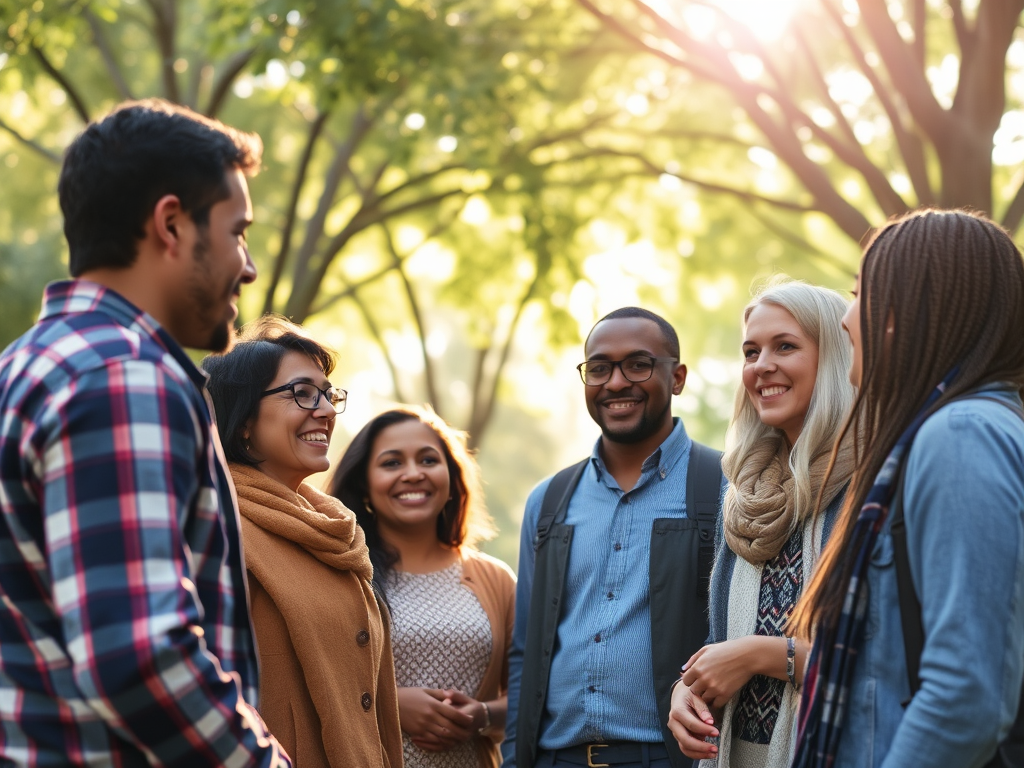
From Conflict to Community: Rediscovering Common Ground
There is a quiet truth many of us feel, even if we rarely say it aloud. No matter how we voted or what we believed in the heat of the moment, we long for something more than conflict. We want to feel part of something larger than a fight. We want to feel at home again—in a country not at war with itself but working with itself. The good news is that that country still exists. We are still it.
Recent surveys tell us that Americans remain deeply divided. A February 2025 Pew poll found 47 percent approve of the 47th president’s performance, and 51 percent disapprove. Strong feelings remain on all sides. Other research shows Americans are equally divided over whether life today is better or worse than decades past. But statistics are not destiny. They only describe the moment we are in, not where we are going.
So, how do we begin to close the distance between us? How do we move forward, not just individually but together?
The first step is recognizing that our divisions often run deeper than the issues themselves. Social scientists now describe today’s polarization as less about policies and more about identities. Many of us have spent years surrounded by people who vote like us, read the same headlines, follow the same influencers, and reinforce the same conclusions. That echo effect can make the other side feel far more extreme than they really are. It turns political disagreement into personal mistrust.
We are also living in a digital environment that rewards outrage more than understanding. Social media platforms amplify the loudest voices, often prioritizing emotion over evidence. That doesn’t mean our neighbors are lost to anger. It just means that algorithms don’t reward grace and rarely reflect the kindness most people still practice in person.
At this moment, it’s helpful to remember what most Americans still want: a working government, safe streets, strong communities, and our children to be better off. These shared desires are not naïve. They are the foundation on which authentic civic renewal can be built.
Some of that work is already happening. A bipartisan group in Congress, the Build America Caucus, has begun working across the aisle on projects like housing and broadband access. They succeed not because they agree on everything but because they focus on what matters to everyone. Groups like Braver Angels are bringing people from different political backgrounds together face-to-face and discovering that once we talk—not tweet—we listen more than we shout.
We also have tools to protect the balance of power that makes this country work. Simple legislative reforms requiring Congress to review presidential emergencies or protecting election systems from partisan manipulation don’t attack any leader. They strengthen the guardrails that every leader should respect. They are not about looking back. They are about making sure the road ahead stays open and safe for all.
Most importantly, each of us plays a role in setting the tone. We can choose community over conflict, presence over provocation, and shared purpose over short-term wins. That starts small. Ask someone how their family is doing before asking how they voted. Support a local school levy. Read across the spectrum. Share something thoughtful instead of something viral. These are small acts, but they build something strong: trust.
None of this means pretending we agree on everything. It means rediscovering that we don’t have to.
When asked what form of government had been created in Philadelphia, Benjamin Franklin famously answered, “A republic, if you can keep it.” That promise doesn’t belong to one party or one movement. It belongs to everyone willing to build and keep faith in each other. Our strength was never in the heat of our divisions but in our ability to cool them together.
In the coming years, we will look back on this chapter. And if we’ve done the quiet, steady work of listening, repairing, and reuniting, then this era will take its place not as our breaking point but as a moment of turning—a time when we remember what it meant to be one nation and choose to be it again.

