Charlie Kirk’s assassination is tragic, but it is not an isolated wound. Daily gun deaths, toxic rhetoric, and unchecked access to weapons are hollowing out our nation — and we refuse to act.
“No man is an island. Any man’s death diminishes me, because I am involved in mankind.” John Donne wrote those words four centuries ago, but their truth echoes now with painful clarity. Every death is a claim on our conscience. That is why the killing of Charlie Kirk at Utah Valley University on September 10, 2025, cannot be seen as an isolated act. Conservative activist Charlie Kirk was fatally shot while speaking at UVU, an attack state officials described as a political assassination (Reuters).
However, we cannot ignore another truth: Charlie Kirk was not a neutral figure. His rhetoric was considered by many to be egregiously inflammatory, patriarchal, and steeped in the worst elements of white Christian nationalism. Much of what he said was deeply offensive to millions of Americans. It is also true that some, instead of mourning his death, have openly celebrated it.
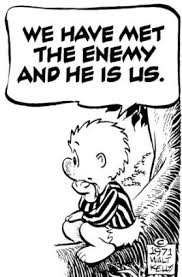
That reaction, however, misses the essential point of what it means to live in a free society. In a democracy, even speech that offends or enrages deserves the right to be heard, debated, and challenged in the open marketplace of ideas. If that marketplace is not free for all voices, then it is not free at all. When we answer words with bullets, we do not just silence one man. We diminish freedom itself. We risk becoming the very thing we claim to despise.
According to the Centers for Disease Control and Prevention (CDC), 46,728 people in the United States died from gun injuries in 2023. That equals about 128 every day. Nearly 60 percent were suicides, while nearly 40 percent were homicides, as confirmed by death certificates and summarized by the nonpartisan Pew Research Center. Each number is a person. Each person leaves behind family, friends, and a community forever changed.
Those deaths do not happen in a vacuum. They happen in a climate of rising political rage and toxic culture. We now live in a country where inflammatory rhetoric is rewarded, where social media celebrates cruelty, and where even a fender bender can erupt into road rage and gunfire. The CDC numbers tell us the scale of the problem, but our daily discourse explains why the fuse keeps burning shorter. Easy access to firearms ensures that anger, despair, and grievance too often end with a bullet.
Yesterday proved the point. In Evergreen, Colorado, a 16-year-old student opened fire at his high school, critically injuring one classmate and wounding another before taking his own life (CPR News; Al Jazeera). In San Francisco, six people were wounded in a mass shooting in the Bayview–Hunters Point neighborhood (San Francisco Chronicle). And in Tampa, one person was killed and five were injured in a street shooting (City of Tampa). Three communities, three sets of families, all on the same day.
I do not blame firearms in the abstract. I was raised in a rural, agrarian community where guns were part of daily life. We hunted for food. We shot for sport. Families kept firearms for personal safety. I do not want to strip anyone of that heritage or those rights. What I want is honesty. The truth is that we have refused to take every reasonable step to keep guns out of the hands of people most at risk of harming themselves or others. We have failed to connect people to help before harm. That failure belongs to us, not the weapon.
Research backs up solutions. The RAND Corporation has shown that states with purchaser licensing or permit-to-purchase laws see reductions in both homicides and suicides, and that waiting periods reduce suicides and may reduce murders by inserting time and screening between an impulse and an irreversible act (RAND on Licensing; RAND on Waiting Periods). These policies are not bans. They are safeguards that preserve lawful ownership while saving lives.
The FBI’s own data, cited by Pew Research Center, show that handguns — not rifles — account for the majority of gun murders where weapon type is identified. That makes it clear: the real question is not about one model of gun, but about access and accountability across all firearms.
And so I return to Donne. “Any man’s death diminishes me.” The assassination of Charlie Kirk is tragic. So too are the shootings in Evergreen, San Francisco, and Tampa. So too are the 128 lives that ended yesterday, and the 128 more that will end today. In a world where our politics grow sharper, our discourse grows cruder, and our anger grows louder, we cannot continue to accept this as normal. Rights and rage together are not freedom. They are a recipe for collapse.
The danger is not only in the violence itself, but in the lesson it teaches. If people come to believe that inflammatory or offensive voices should be met with violence rather than rebuttal, then the marketplace of ideas collapses. It becomes a marketplace of fear and force, not freedom. That is how free societies wither. We must insist on a higher standard: defend rights even when we despise the message and answer bad ideas with better ones — not with gunfire.
We do not need to overregulate. We do not need to trample rights. But we do need rational limits on access and a cultural reset that prizes decency over division. We must keep guns away from those most likely to do harm and steer them toward help. We must demand more from our leaders, our platforms, and ourselves. Anything less is complicity in the diminishment of America’s soul.
 Why Eye Write