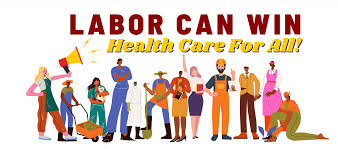
In pursuing equitable treatment and workers’ rights, organized labor has emerged as a driving force advocating for single-payer healthcare. In this article, I will delve into the historical context, motivations, challenges, and potential impacts of labor’s involvement in championing a single-payer healthcare system.
From its inception, the labor movement in the United States has intertwined healthcare advocacy with broader calls for social and economic justice. While labor unions historically secured healthcare coverage for workers through collective bargaining agreements, disparities in access persisted, especially among marginalized groups.
The shortcomings of the current healthcare system, such as soaring costs and a growing number of uninsured individuals, have prompted organized labor to reassess its approach to healthcare advocacy. Single-payer healthcare resonates deeply with labor’s social solidarity and equity values by offering universal coverage and eliminating private insurance. This shift can potentially alleviate healthcare burdens on employers and empower workers in wage negotiations.
However, despite the undeniable merits of single-payer healthcare, organized labor encounters significant challenges. Opposition from vested interests in the private healthcare industry, ideological divides, and partisan politics present obstacles to progress. Concerns about disrupting existing healthcare arrangements and perceived loss of autonomy among some union members contribute to skepticism and opposition.
Nevertheless, labor’s advocacy for single-payer healthcare holds transformative potential. Through leveraging collective bargaining power and grassroots organizing capabilities, labor unions can mobilize support for comprehensive healthcare reform. By framing healthcare as a labor issue, broader coalitions can be formed, strengthening alliances with social justice movements and advancing a vision of healthcare that prioritizes universal coverage, affordability, and workers’ rights.
Resolutions such as Resolution 6: Making Health Care For All a Reality, submitted by the AFL-CIO Executive Council in 2017, and Resolution 10: Winning Guaranteed Health Care for All introduced at the 2022 biennial convention, underscore the urgent need for healthcare reform. These resolutions emphasize the labor movement’s commitment to quality healthcare as a basic right and advocate for transitioning to a single-payer system while retaining a role for workers’ health plans.
The AFL-CIO continues to advocate for healthcare reform centered on universal coverage and affordability, supporting various proposals such as public options and Medicare expansion. Emphasizing collective bargaining rights, the AFL-CIO underscores the importance of preserving workers’ ability to negotiate healthcare benefits.
While the path towards single-payer healthcare remains uncertain, the AFL-CIO’s support for this concept represents a significant shift in healthcare advocacy, reflecting a steadfast commitment to social and economic justice. By championing universal coverage and equitable access to healthcare, labor unions are instrumental in shaping a more just and humane society.
In conclusion, the AFL-CIO’s advocacy of single-payer healthcare underscores the pivotal role of labor in advancing comprehensive healthcare reform that serves the interests of working people and society as a whole. It reflects our commitment to achieving greater equity and justice in the healthcare system, ultimately striving for a society where healthcare is a fundamental human right.
 Why Eye Write